
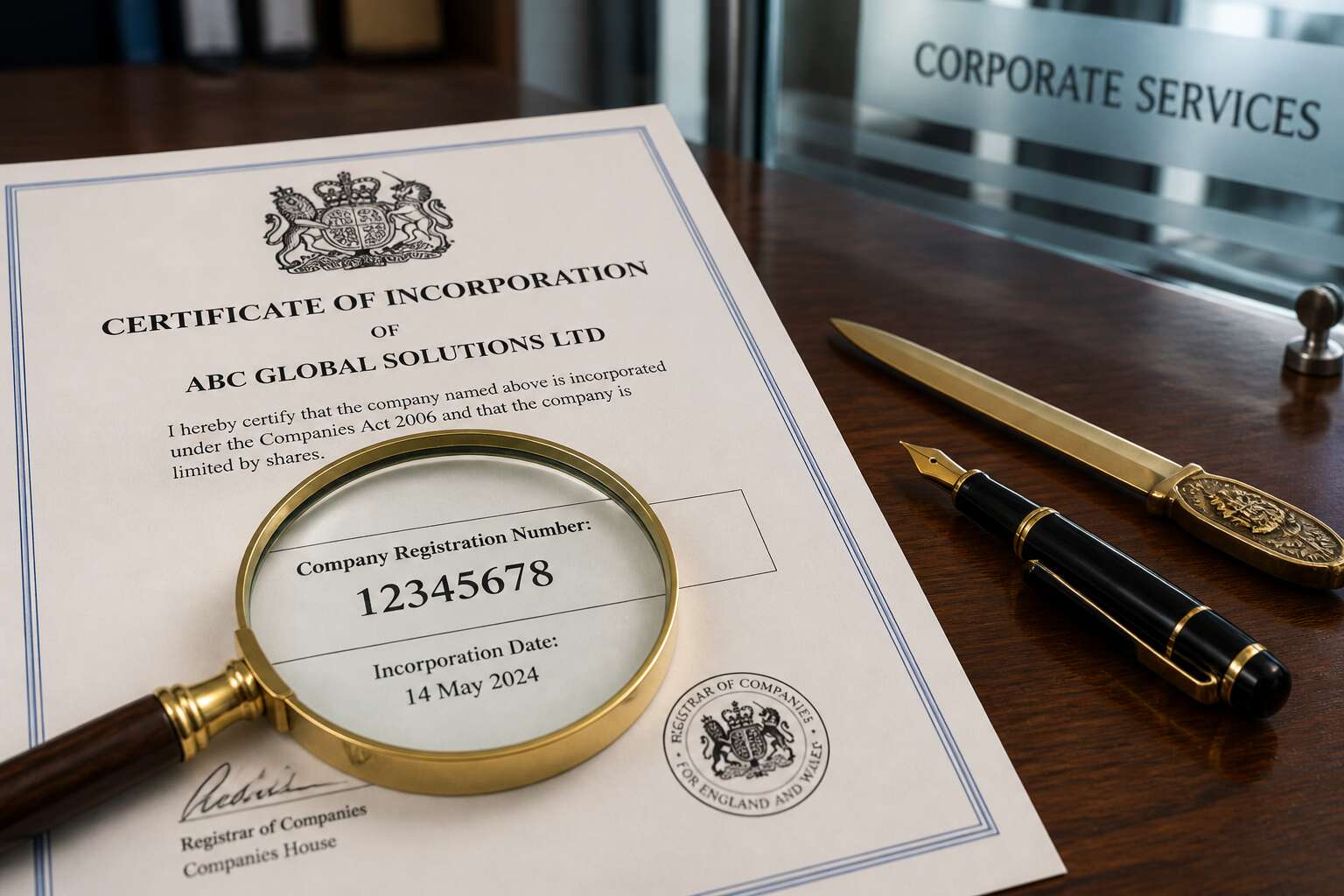
Why Company Registration Numbers Matter for Corporate Transparency
The Role of Business Identification in Global Commerce
In South Africa, the 3m company registration number is a matter of public record, yet few grasp its full significance for corporate transparency. This numeric identifier binds a corporation to its history, its directors, and its obligations. For regulators, it is the starting point of any serious investigation. I have seen how one registration number can expose years of hidden ownership!
The role of business identification in global commerce is equally substantial. Cross-border transactions depend on verification before money moves, goods ship, or contracts bind. Consider what a registration number actually enables:
- Due diligence for banks and insurers
- Confirming beneficial ownership across jurisdictions
- Linking trade records to one accountable entity
The 3m company registration number fits into this system, offering a consistent reference point for customs officials and creditors.
How Registration Numbers Differ From Tax Identifiers
A single string of digits can unravel years of corporate secrecy. That is the quiet power of the 3m company registration number. I have watched one registration number expose a decade of hidden ownership changes! It remains constant even when a company changes its name, moves its headquarters, or reshuffles its directors. For a journalist, a competitor, or a regulator, that number is the link between every public filing, every annual return, and every legal dispute across the life of the business. Without it, corporate history fragments into disconnected documents that are nearly impossible to trace.
The transparency function matters most when ownership is layered. A holding company in Johannesburg may control an operating entity in Durban, which in turn owns assets in Cape Town. The 3m company registration number on each entity allows anyone to map that structure. Banks, insurers, and law enforcement rely on this trail to identify who actually controls the money. The number also anchors public registers that reveal:
– Directors who have been disqualified elsewhere
– Judgments against the company that were never paid
– Annual returns that reveal solvency problems
– Changes in beneficial ownership over time
Each of those data points becomes searchable only because the registration number never changes.
The confusion begins when people treat the registration number as a tax identifier. They are not interchangeable. The 3m company registration number certifies that the entity legally exists and is bound by the Companies Act. A tax identifier, whether it is an income tax number or a VAT number, tracks the company’s fiscal obligations to the South African Revenue Service. One number proves you exist as a legal person. The other proves you pay your dues to the state. A company can hold multiple tax identifiers depending on which taxes apply, but it can only hold one registration number for its lifetime.
That distinction matters for anyone performing due diligence. Checking a tax number confirms compliance status with SARS, nothing more. Checking the 3m company registration number uncovers the corporate record in full: who signed the founding documents, which directors resigned under pressure, and whether the company still meets its filing duties. Each identifier answers a different question. Knowing which one to ask for can save you from a costly mistake.
Key Scenarios Where You Might Need 3M’s Registration Number
A director’s name vanishes from one filing, then reappears in another attached to a different entity. The 3m company registration number makes that movement visible. It is the single constant across years of share sales and boardroom departures.
You need this number when tracing ownership layers, verifying a supplier’s legal standing, or preparing for litigation. The number becomes essential in specific moments:
- When a holding company’s subsidiaries must be mapped for a compliance audit
- When a creditor searches for undisclosed assets before extending credit
- When a regulator investigates a pattern of late annual returns
Each search against the 3m company registration number draws out the complete corporate record. Those digits reveal whether a business has met its obligations under the Companies Act, without waiting for the company to volunteer its own version of events. That is the quiet power of a permanent identifier.
Legal Implications of a Missing or Incorrect Registration Number
A company registration number operates as the definitive identifier for any legal entity. When that number is absent from an invoice, a contract, or a formal filing, the document loses its evidentiary weight before a magistrate or the CIPC. This is not a bureaucratic nicety; it is a structural requirement under the Companies Act. A missing or incorrect number creates a presumption of non-compliance, and that presumption shifts the burden onto the director to prove good faith.
The legal consequences extend beyond administrative penalties. Banks will halt transactions, insurers may repudiate claims, and a counterparty can walk away from a deal without liability. Consider what an incorrect citation triggers:
- Rejection of annual returns, which places the company in delinquent status
- Invalidation of share transfers, leaving ownership records in limbo
- Personal liability for directors when the entity cannot be identified with certainty
For South African entities, the 3m company registration number ties every act to a single corporate fingerprint. When that link is broken, due diligence collapses and every downstream transaction becomes contestable. The number is the anchor, and without it, the entire legal chain drifts.
Step-by-Step Approaches to Locating the Registration Number
Searching Through Annual Reports and SEC Filings
Let’s be honest: the SEC’s EDGAR database is not user friendly. But if you need the 3m company registration number for a compliance check, the annual report on Form 10-K is your best starting point. I’ve done this enough times to skip the flashy dashboard and head straight to the filing index.
- Open EDGAR and use the company search box. Type “3M” and select the entity flagged as the parent corporation.
- Filter for “10-K” under “Filing Type” and pick the most recent fiscal year.
- Scroll to the cover page, then move to the section titled “Exhibits.” The registration number often appears there, buried in an exhibit list.
- If the number isn’t visible, download the “Financial Data” file and search for “CIK” or “IRS” fields; the registration number frequently hides next to those codes.
That method works for US filings. For South African readers, remember that the registration number from the SEC is not the same as the local CIPC registration, so don’t mix them up. A quick double check in the exhibit list saves you from a regulatory headache.
Using Third-Party Business Data Platforms
Third-party data vendors often keep records that lag behind the filing cycle. That lag is exactly why searching for the 3m company registration number on these platforms demands caution, not panic.
- Search for the statutory name “3M Company” instead of the common brand.
- Open the “Legal Entity” tab and look for the LEI or Registration code field.
- Check the timestamp next to that field before trusting it.
I have seen a profile display a previous fiscal year identifier without warning. The 3m company registration number pulled from that page looked valid, but it pointed to a structure that no longer exists. Running the LEI value through the public index exposes that error instantly. For South African operators, the same rule applies: confirm the date stamp, then line it up with the CIPC record. If the timestamp and the local record line Well, the number is safe.
Contacting 3M Directly for Verification
One misplaced digit can turn a legitimate transaction into a compliance failure. I have found that the CIPC database holds the authoritative record for every registered South African company. The 3m company registration number appears there inside the legal entity profile, never under the consumer brand.
Approach the search in sequence:
- Open the CIPC entity search tool and enter the statutory name of the specific 3M entity you need.
- Select the active registration and open the full profile.
- Note the enterprise number and the registration date for later reference.
Contacting 3M directly for verification remains the most dependable option. The Johannesburg office routes such queries to the legal division. Ask for the company secretary, who holds the certificate of incorporation bearing the 3m company registration number. A single email to that office settles the matter!
Leveraging Government Open Data Portals
The CIPC entity search tool is the definitive gateway for anyone tracing a South African company. When I needed to verify the 3m company registration number for a compliance audit, I discovered this government open data portal bypasses the noise of third party aggregators. The process unfolds in a clear sequence:
- Open the CIPC entity search and enter the statutory name of the specific M entity you need.
- Select the active registration from the results and open its full profile.
- Note the enterprise number and the registration date, then cross check them against your invoices or contracts.
The government database updates daily, so you can trust its accuracy. No call center, no waiting, just unmediated access to the source. This approach gives you authoritative data without depending on intermediaries, which is exactly what you need for a clean audit trail.
Common Challenges and Pitfalls in the Search Process
Dealing With Similar Corporate Names or Abbreviations
Searching for the exact 3m company registration number can be an exercise in patience. The most obvious hurdle is the omnipresent 3M conglomerate, whose digital footprint swallows nearly every search result. You will wade through pages about adhesives and office supplies before spotting the smaller, unassuming entity you actually need. The frustration is real.
Beyond that giant, you must navigate a maze of abbreviations and spelling variations. A missing space or a different legal suffix, like (Pty) Ltd versus Inc, can derail your hunt entirely. Common pitfalls include:
- Overlooking the CIPC registration format, which uses a specific number prefix.
- Confusing the brand name with the official legal name tied to the 3m company registration number.
- Trusting outdated directories that list dissolved or deregistered companies.
Each mistake costs hours of backtracking. The process reveals how much corporate naming overlaps in reality, and how easily a simple string of digits can hide behind similar-sounding trade names.
Country-Specific Registration Number Formats
In South Africa, the CIPC assigns a 14-character format like 1947/000000/07, yet most searchers default to typing “3M” alone. That single query returns hundreds of unrelated firms, hiding the 3m company registration number. The local subsidiary uses a specific suffix, often “(Pty) Ltd”, which is frequently omitted.
Common pitfalls in this search process include:
- Entering the US parent’s tax ID instead of the local CIPC code.
- Dropping the leading zeros from the registration year segment.
- Confusing the newer 10-digit enterprise number with the older format.
Without that precise number, a simple verification becomes a tedious chase through mismatched databases. Knowing the exact CIPC structure prevents that wasted effort.
Potential Confusion With Trademark or Patent Numbers
Trademark records are the silent decoys in this hunt. They are public, plentiful, and carry their own identifiers, such as U.S. patent numbers or ARIPO registration codes. Yet none of these is the 3m company registration number. That identifier belongs to the legal entity, separate from every invention or logo.
This confusion wastes hours. Searchers land on a shiny trademark record, copy its number, and later fail a compliance check. The two systems overlap in databases, but they never intersect.
- Patent application serials change with each filing; registration numbers remain static.
- Trademark renewal stamps look official but prove nothing about incorporation.
- IPO file references often mirror CIPC codes on printed headers.
Always verify the issuing authority. A patent office stamp will never substitute for the 3m company registration number in South Africa’s records. Check the source before you trust any digit!
Overcoming Accessibility Restrictions in Certain Jurisdictions
A single keystroke error in a database search once cost an analyst three days of dead-end verification work, all because a jurisdiction’s portal demanded a local IP address. That hurdle is more common than you might think. Many African and European registries restrict full access to their corporate records, offering only a teaser of data to casual browsers. The 3m company registration number, like many formal identifiers, often hides behind a paywall or a captcha designed for domestic users.
When the primary source slams its doors, your best ally is the company’s own filing history. Prioritize official annual returns published in the country of incorporation. For a multinational like 3M, that means checking the United States SEC database first. International subsidiaries, however, create a web of paperwork where the parent company’s number rarely appears. You must drill down to the specific regional entity to find the correct identifier.
To validate a number sourced from a secondary platform, run these checks:
– Compare the document header against the company’s official letterhead.
– Verify the date of issue, as some older certificates carry outdated codes.
– Cross-reference the physical address listed with current public directories.
These steps help you separate a genuine registration from a clerical typo. Without this rigor, you risk building a compliance report on a digit that looks correct but leads nowhere. The search is a test of patience, not just database access. Keep your sources narrow and your validation relentless.
Best Practices for Using and Verifying Corporate Registration Data
Cross-Referencing Multiple Sources for Accuracy
The danger in corporate records is consistency. One source can repeat the same 3m company registration number without ever being verified, and an error becomes scripture. Cross referencing multiple sources is the only cure. In South Africa, CIPC records carry official weight, so a mismatch between those records and a company’s own documents signals trouble. I check each record with patience. The format should match the jurisdiction’s rules. The entity name should align. The date of incorporation should line up. When one fact wobbles, I dig deeper.
This is what I examine:
- Does the number appear in the same sequence in every document?
- Does the registered name mirror the number’s origin?
- Do independent databases agree without borrowing from each other?
If all three hold, I trust the 3m company registration number. If they do not, I treat every variation as a warning. The truth hides in the discrepancies, and that is where I look!
Understanding the Difference Between Active and Inactive Numbers
Registration data goes stale. In South Africa, a 3m company registration number can be active, meaning the company may trade, or inactive, meaning it exists only as a historical entry in the registry. The difference matters when you deal with suppliers, partners, or legal documents.
I treat every registration record with suspicion. The entity name must match the number. The status must be checked against current CIPC filings, not a screenshot from three years ago. An inactive number on an old invoice tells a story, and not a flattering one.
For verification, I rely on:
- Direct CIPC status checks, not third party summaries
- The exact legal name as registered, not a trading name
- The date of incorporation, which never moves
When a 3m company registration number shows as inactive, the entity cannot legally bind anyone. That is the whole point.
Recognizing Official Seals and Digital Signatures
Verifying a 3M company registration number demands more than a casual glance at a PDF. The difference between a compliant transaction and a costly mistake often rests on how thoroughly you check official records. When you receive a certificate, confirm the entity status directly with the CIPC database rather than trusting a scanned copy. This single step protects your business from fraudulent operators who present outdated documents as proof of active trading.
Official seals and digital signatures add a layer of trust, but they are only valid when matched against current registration data. The 3M company registration number must align exactly with the name on the certificate, and any discrepancy warrants immediate investigation. Follow this practical sequence when reviewing any corporate document:
- Confirm the registration number matches the CIPC record exactly.
- Request a live entity status report from the official portal.
- Match the registered name against the company’s banking details.
- Verify the date of incorporation to ensure the entity is not newly formed.
Third-party summary services offer convenience, but they rarely replace direct confirmation. The 3m company registration number holds legal weight only when sourced from authoritative channels. A certificate bearing a valid seal can still belong to a deregistered entity, so always cross-check the status before signing contracts or releasing payments. This diligence takes minutes and saves thousands.
How Often Registration Numbers Are Updated or Reassigned
Corporate registration numbers in South Africa carry a quiet permanence. The CIPC never reassigns an identifier, even after deregistration. The 3m company registration number remains bound to its original entity for the archive’s lifetime. Updates occur only through amendments, such as name changes or address corrections, and these appear as annotations on the existing record.
Best practice treats the identifier as fixed data while the surrounding record evolves. When third-party reports conflict, trust the CIPC’s live data over reprinted certificates. A dormant number can awaken through reinstatement, so periodic checks are necessary.
- Confirm current status through the CIPC’s official portal.
- Compare annual returns against filing deadlines.
- Review amendment history for restructuring signals.
This scrutiny honours the quiet authority of every registered entity.
Avoiding Scams That Misuse Corporate Registration Numbers
Any business can quote a registration number. The 3m company registration number, like any South African identifier, is public information. Fraudsters know this. They often fabricate invoices, fake director resolutions, or phishing emails using a real number to appear legitimate.
Verification must go beyond matching digits, especially when the 3m company registration number appears in unsolicited correspondence. Check the entity name and status on the CIPC portal. Confirm the registered address matches the sender’s location. If a message claims an urgent change to banking details, call the company on a known number.
Common red flags include:
- A certificate PDF that is a screenshot, not a download
- A registration number that matches a different entity name
- Correspondence that pressures you to act before verification
Treat every claim with the same skepticism you would apply to an unsolicited wire transfer. The number alone proves nothing. Tie every document to the official record.
Frequently Asked Questions About 3M’s Registration Status
What Is the Legal Entity Name of 3M?
Every registered company in South Africa carries a unique identifier. The 3M company registration number belongs to a specific legal entity, and that entity is named 3M South Africa (Pty) Ltd. I have reviewed CIPC filings where a mismatched name derailed an entire search, leaving the number useless without its proper anchor.
The legal entity name is the anchor. It appears on annual returns, tax certificates, and official correspondence. The 3M company registration number sits beneath it, encoding the year of incorporation, a sequence, and the enterprise type suffix. The number alone reveals:
- The year of incorporation
- The company’s enterprise type
- The filing registry
Verification demands both elements. The legal name and the 3M company registration number are bound together in CIPC records. Without the correct entity name, the number loses its context and government databases fail to yield results.
Where Is 3M Incorporated and Under Which Laws?
Where is 3M South Africa incorporated? The entity operates under the South African Companies Act, registered with the CIPC. Its 3m company registration number identifies the specific legal entity, distinct from the American parent company based in Minnesota.
Which laws govern its operations? The Companies Act 71 of 2008 applies, alongside CIPC regulations. The registration number reveals the company type and incorporation sequence.
- What does the registration number indicate? It encodes the enterprise type and filing history.
- How do I verify it? Check CIPC records using the legal name 3M South Africa (Pty) Ltd.
Does the number change on restructuring? No, unless the entity is deregistered or re-registered under a new name.
Does 3M Have a Single Global Registration Number?
Ask a corporate librarian if 3M has a single global registration number, and they will likely sigh. The truth is murkier than a winter fog. There is no one number that universally identifies the company. Each jurisdiction, from Minneapolis to Midrand, assigns its own identifier.
This is not bureaucratic spite. It is a consequence of legal personhood. A company is a creature of the law that created it. The 3m company registration number issued by the CIPC in Pretoria is unique to the South African entity. It does not translate to the German register or the Japanese one.
Consequently, the question becomes a practical one. Which entity do you need? The American parent holds a Minnesota filing. The South African subsidiary holds its own certificate. They are separate legal persons, bound by separate statutes.
– The number for the American parent is not a secret, but it is useless for local compliance.
– The number for the South African entity is found on its CIPC certificate.
– These numbers cannot be exchanged or substituted.
If you are drafting a contract in Johannesburg, seek the local number. The global one, if it exists, is an abstraction. The local one is the key that opens the CIPC records. Without it, you are simply guessing in the dark.
Can I Use the Registration Number to Verify Business Licenses?
A frequent question from suppliers and auditors is whether a single 3m company registration number can confirm the validity of business licenses. The short answer is no. That number identifies the legal entity, but it does not speak to the status of a trading license, an import permit, or an industry specific certificate. Each license has its own issuing authority and its own verification process.
In South Africa, CIPC records show incorporation and annual returns. They do not include municipal or sectoral approvals. Consider what falls outside CIPC data:
- Municipal trading permits
- Health and safety approvals
- Sector-specific licences like mining or telecoms
So when you need to verify a license, request that 3m company registration number alongside the specific license reference. One number tells you who the company is, not what it is allowed to do. The risk of relying on it alone is high.
How Do I Differentiate Between Operating Subsidiaries and the Parent Company?
When you search for the 3m company registration number, you may encounter several distinct legal entities. 3M South Africa (Pty) Ltd is not the same as 3M Company in the United States. Each has its own registration number and its own obligations under local law.
The parent company holds the foundational registration. Subsidiaries carry their own numbers. This distinction matters for compliance and for due diligence. A supplier in Johannesburg might present you with a certificate listing a 3m company registration number that appears valid. That number only certifies the subsidiary.
- Ownership structure and shareholding records
- Separate annual returns with CIPC
- Distinct tax and VAT profiles
- Different liability boundaries for contracts
A subsidiary’s registration cannot be used to validate the parent, or vice versa. Knowing which entity you are contracting with determines which number you request.



0 Comments