
Understanding the basics of company registration
What is a company registration certificate
In South Africa, your business starts with more than a name; it starts with paperwork that signals seriousness. A founder once said, “Registration is the first handshake with the market!” That handshake becomes a doorway when the company is ready to operate openly.
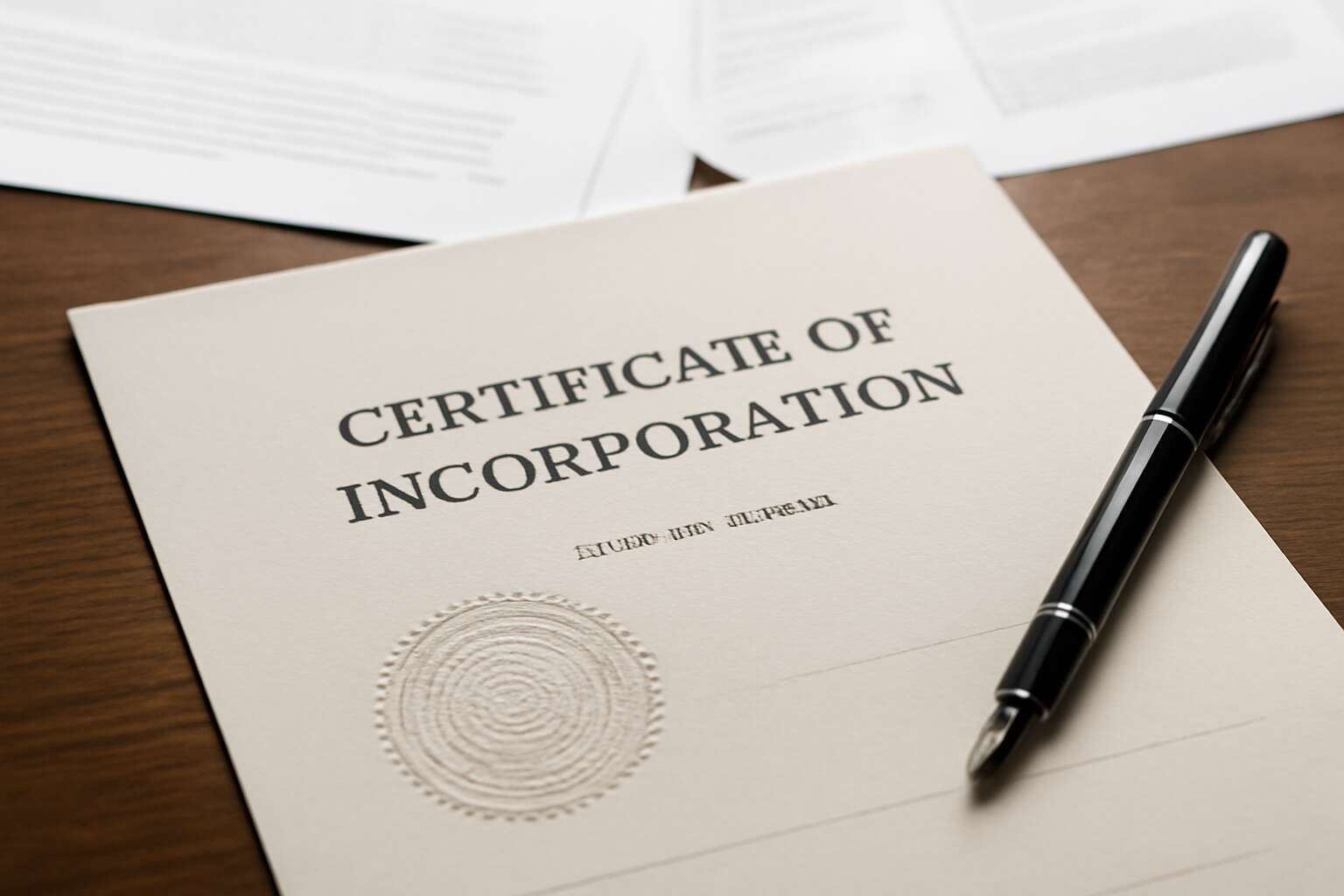
Understanding the basics of company registration means knowing what the company registration certificate and notice of incorporation represent. They confirm legal status, capture essential details, and mark the moment you join the public record. These documents are your business’s royal seal in the eyes of suppliers and clients.
- Public records show your registered name and number
- They enable opening a business bank account
- They establish the company’s legal existence from incorporation date
In South Africa, this isn’t cosmetic—it’s the doorway to contracts, licenses, and credibility. The process clarifies ownership, directors, and registered address, forming the backbone of compliant operation.
What is a notice of incorporation
Across South Africa, a business backed by proper paperwork radiates a quiet certainty. A recent industry survey found that more than 70% of buyers prefer partners who are officially registered. “Registration is the first handshake with the market,” a founder once said. These doorways—your company registration certificate and notice of incorporation—anchor your legal identity and signal readiness to operate openly, from the first invoice to the final signature!
Understanding the notice of incorporation means tracing how a company steps from idea to public identity. It marks when your entity begins, records who governs it, and fixes the registered address in the public ledger. For a South African business, this is not a rumor but a legal doorway—opening access to contracts, compliance checks, and ongoing reporting.
- Records the start date and official name in the public register.
- Outlines governance and registered address for transparency.
Key purposes of the certificate and notice
Across South Africa, 68% of buyers say they prefer to partner with companies that can show proper paperwork. The company registration certificate and notice of incorporation are more than symbols; they are the quiet handshake with the market, the signature that says ‘we are here to stay.’ In rural towns and city offices alike, this paper trail turns ideas into accountable actions and opens doors to contracts, suppliers, and legitimate finance.
Understanding these documents isn’t about legal mumbo-jumbo; it’s about identity and trust. They anchor your public identity, cement credibility with lenders and customers, and establish a clear frame for accountability. When a business carries these documents, it signals readiness to operate openly and responsibly, inviting partners to meet you where you stand.
Legal significance and scope across jurisdictions
Across South Africa, 68% of buyers prefer partnering with firms that can show proper paperwork. Understanding the basics of the company registration certificate and notice of incorporation reveals how a legal persona is formed—an identity that travels beyond signage into contracts, licenses, and everyday accountability across urban offices and rural towns.
The legal significance spans multiple jurisdictions, where rules shape naming, share structures, and reporting cadence. Clarity here reduces friction as firms grow beyond borders, inviting fair competition and dependable collaborations.
- Public record and lasting trace
- Credibility with lenders and suppliers
- Governance alignment and reporting duties
- Cross-border recognition and operations
In this quiet handshake, the phrase ‘company registration certificate and notice of incorporation’ anchors credibility, signaling readiness to trade openly and responsibly in a marketplace that rewards transparency and accountability.
Required documents and eligibility
Eligibility criteria for registration
Required documents for registration and the eligibility check set the stage for obtaining the company registration certificate and notice of incorporation. This process feels like gathering keys to the corporate realm—clear, complete, and compliant, especially in South Africa where paperwork signals legitimacy and trust.
- Proposed company name and name reservation reference
- Memorandum of Incorporation (MOI)
- Identification documents for directors and subscribers (ID or passport)
- Proof of address for directors and the registered office
Eligibility criteria for registration hinge on legal status and governance readiness. A company must be a separate legal entity, with at least one director, not disqualified from acting, and compliant with the Companies Act. This path leads to the company registration certificate and notice of incorporation.
Core documents to file with the registrar
Paperwork, in South Africa, is the social theatre of legitimacy—without complete forms, even ambition can look suspiciously like a prop in a boardroom farce. Gathered properly, your documentation clears a clear path to the company registration certificate and notice of incorporation. The four essentials that signal readiness cover naming, governance, identity, and address.
- Proposed company name and name reservation reference
- Memorandum of Incorporation (MOI)
- Identification documents for directors and subscribers (ID or passport)
- Proof of address for directors and the registered office
Beyond the forms, eligibility criteria hinge on legal status and governance readiness: a company must be a separate legal entity, with at least one director, not disqualified from acting, and compliant with the Companies Act. Meeting these conditions marks the moment when the registrar approves the record and you move closer to the certificate of incorporation.
Identity and address verification requirements
Identity checks aren’t glamorous, but they’re the gatekeepers of legitimacy. For the company registration certificate and notice of incorporation, the registrar wants clean identity and address verification to confirm who you are and where you live.
Here are the essential identity and address verification elements:
- Directors and subscribers: valid identification (SA ID or passport) and matching full names
- Proof of address: bill or bank statement dated within 3 months, matching the residential address
- For non-residents: overseas address and supporting registrar documents
Combine these with the general eligibility standards—at least one director, a separate legal entity, and no disqualifications—and you’re closing in on the company registration certificate and notice of incorporation.
Special considerations for foreign entities and branches
Required documents and eligibility anchor the registrar’s decision. In South Africa, you must demonstrate a workable corporate structure: at least one director, a separate legal entity, and no disqualifications. Identity checks and address verification act as the gatekeepers, ensuring the people and places behind the company are real. Names must match across documents, and the residential address should be current and verifiable. The registrar also looks for consistency between the information on the forms and the business’s foundational papers.
Special considerations for foreign entities and branches: cross-border entities face extra scrutiny. An overseas address may be required alongside registrar-approved documentation, and translations or apostilles can be necessary for documents not in English. A SA-based representative or registered office often helps navigate local requirements. When you prepare the necessary paperwork for the company registration certificate and notice of incorporation, clarity, accuracy, and a solid legal identity are your fastest routes to approval.
Common errors in document submission
The path to a company registration certificate and notice of incorporation hinges on a clean, auditable paper trail. One in five registrations stumble on document gaps, not ambition.
In South Africa, a workable corporate structure matters: at least one director, a separate legal entity, and no disqualifications. Identity checks and address verification act as gatekeepers, ensuring names align across documents and that addresses are verifiable.
Common errors in document submission include:
- Names that don’t match IDs or registration forms
- Addresses that are outdated or unverifiable
- Director or shareholding details missing or inconsistent
- Translations not prepared or apostilles missing where required
Foreign entities demand extra care—translations, apostilles, and a SA-based representative can smooth the path to registration. With clarity and accuracy, the process becomes a predictable milestone rather than a maze!
The registration process and timelines
Step by step registration workflow
Registration is the doorway to legitimacy, and in South Africa the path can feel ceremonial yet decisive. “The certificate is a passport to business life!” a seasoned adviser once told me, and I’ve seen that truth play out. The journey culminates in two key artifacts—the company registration certificate and notice of incorporation—that stamp your entity’s formal existence.
- Clarify your chosen name and structure to align with SA rules.
- Assemble essential documents and verify identities to prevent backlogs.
- Submit the package and monitor progress; approvals arrive within defined windows.
- Receive the formal proofs—the two artifacts—signaling completion.
Across the board, timelines hinge on completeness and workload, but the workflow remains a predictable cadence when every piece is in place.
Registration fees and payment methods
South Africa’s registration process moves with the cadence of your paperwork. When the package is complete, approvals tend to arrive within the registrar’s defined windows, and the journey culminates in company registration certificate and notice of incorporation that signal your formal life as a business. Timelines hinge on completeness and workload; delays fade when identities and core documents are spotless, letting you progress without perpetual back-and-forth.
Registration fees and payment methods vary by entity and registrar, but the financial gatekeepers remain consistent: you pay to unlock operation. Expect charges for registration and name reservation, with payment options including:
- Bank transfer
- Credit or debit card
- Online wallet or portal payment
Whichever method you choose, the act of payment is the bridge from intention to operation.
Processing timelines and service levels
In South Africa, the registration process dances to the cadence of your dossier. When identities and core documents are spotless, approvals land within the registrar’s defined windows, and the moment arrives—the company registration certificate and notice of incorporation signal your formal life as a business.
Processing timelines and service levels vary by workload and entity, but a baseline exists. The registrar’s queue is real, and estimates shift during peak periods. To navigate expectations, common tiers include:
- Standard processing
- Expedited processing
- Priority processing
As the clock ticks, clean data and complete packages shorten the journey from file to function. The certificate and notice of incorporation stand as your gateway to legitimacy and growth.
Post-submission tracking and decisions
Once the dossier crosses the submission threshold, the registrar begins a careful, almost patient audit of every detail. Acknowledgement notifications land in your inbox, and the clock murmurs in the background. In South Africa, post-submission tracking hinges on clean data, prompt replies to queries, and the registrar’s orderly queue. When the checks align, the company registration certificate and notice of incorporation stand ready—the formal keys to your business’s life.
To stay in motion, keep an eye on the milestones and respond swiftly to requests. The journey unfolds through:
- Acknowledgement and intake confirmation
- Data verification and any required clarification
- Final decision and certificate issuance
Because workload ebbs and flows, status updates can arrive at varying tempos. Stay connected to the registrar’s portal and your notification channels; a quick reply clears the path. The issuance marks not just paperwork, but a doorway to opportunity and governance.
Expedited options and what influences timing
Your future starts with a ticking clock and a clean dossier. In South Africa, the journey from submission to signature can feel like a test of nerve—”Speed is governance,” a concise truth that rings through every registrar’s hall. When every datum is precise, the registrar’s verdict can arrive in record time. A flawless file can land quickly, while the quiet tremor of missing details can stretch the wait to weeks. Timelines hinge on data quality, registrar workload, and whether expedited options are engaged.
Expedited options vary by registrar and filing type, but they can shave days off the clock when needed. The levers are express processing for eligible filings, priority handling for data verification, and ensuring submissions are complete to avoid back-and-forth.
- Express processing for eligible filings
- Priority handling of verification queries
- Full, accurate submissions to minimize back-and-forth
Ultimately, timing is a dance between accuracy, queue length, and policy checks. From the first stamp to the moment you hold the company registration certificate and notice of incorporation, the clock narrates your governance and growth.
Certification, notices, and post-incorporation compliance
Obtaining the certificate and notice of incorporation
Your footing in the business world begins with the company registration certificate and notice of incorporation—and in South Africa, that document is more than ink on paper. It signals legitimacy, opens banking doors, and anchors governance. Obtaining it is a precise rite with real consequences.
Certification and notices shape the post-incorporation life. Once issued, align internal records with the certificate and keep governance fit.
- Entity data alignment with regulator records
- Governance documentation and statutory register maintenance
- Compliant cadence for annual returns and filings
Post-issuance, ongoing compliance keeps the certificate alive. Maintain accurate director and shareholding records, monitor changes of address, and stay current with required filings to preserve the privilege of operating under the company registration certificate and notice of incorporation—this is the company registration certificate and notice of incorporation in action.
Display and usage of the certificate
Legitimacy isn’t a buzzword; it’s a durable asset you carry into every negotiation. The company registration certificate and notice of incorporation is the flag you raise at the door—a concrete signal that a legal venture exists, with rules and responsibilities attached. In South Africa, this document carries weight beyond ink on paper, opening doors to banking, governance, and credible partnerships.
Certification is not a one-and-done gesture; it requires ongoing stewardship. Post-issuance life means the paper must resonate through your internal records and boardroom cadence. When directors and shareholders are traceable and decisions are supported by a clear audit trail, the certificate stays alive and the business remains anchored to its commitments.
That steady alignment turns governance from theory into habit—an invisible contract that keeps you honest with every stakeholder and every transaction. The certificate then becomes a navigational tool, guiding growth with integrity rather than haste.
Renewal, updates, and amendments
Across a South African business landscape where trust is capital and permits glow like embers, the company registration certificate and notice of incorporation stands as your enduring beacon. Certification isn’t a one-off milestone; renewal and ongoing stewardship keep the document alive, echoing through internal records, annual reports, and boardroom cadence. When directors and shareholders are traceable and decisions carry a clear audit trail, the certificate remains a living instrument, not a relic of ink.
Post-incorporation compliance rests on renewal, updates, and amendments. Consider these essentials:
- Renewing statutory details to reflect current reality
- Updating director and address information as changes occur
- Amending share structure, capitalization, or registrable particulars
Each adjustment should ripple through governance documents, registers, and reporting cycles to preserve alignment with the original charter. With such discipline, the certificate becomes a navigational tool, guiding growth with integrity rather than haste.
Ongoing compliance responsibilities and penalties for non-compliance
Post-incorporation life is not a single act but a daily discipline. Ongoing compliance is the living spine of the company registration certificate and notice of incorporation, a document that must stay alive in your records. Renewal means updating statutory details to reflect current reality, and governance hinges on director and address information that changes honestly and promptly. When the charter’s terms drift from reality, the whole enterprise loses its bearing.
Ongoing duties ensure your governance mirrors intent and integrity. In the South African landscape, this means timely filings to the Companies and Intellectual Property Commission (CIPC), rigorous record-keeping, and careful alignment of registers with the charter.
- Submit annual returns and other statutory filings by deadlines
- Update director, address, and shareholding records across governance registers
- Amend the share structure or other registrable particulars promptly, with clear board approval
Penalties for non-compliance are real and multifaceted. Fines, administrative penalties, suspension of services, or even deregistration can follow late or inaccurate submissions. The ripple effects reach banks, investors, and day-to-day operations, eroding trust and testing governance discipline.



0 Comments